Monastery of St. Francis of Zadar

Croatia

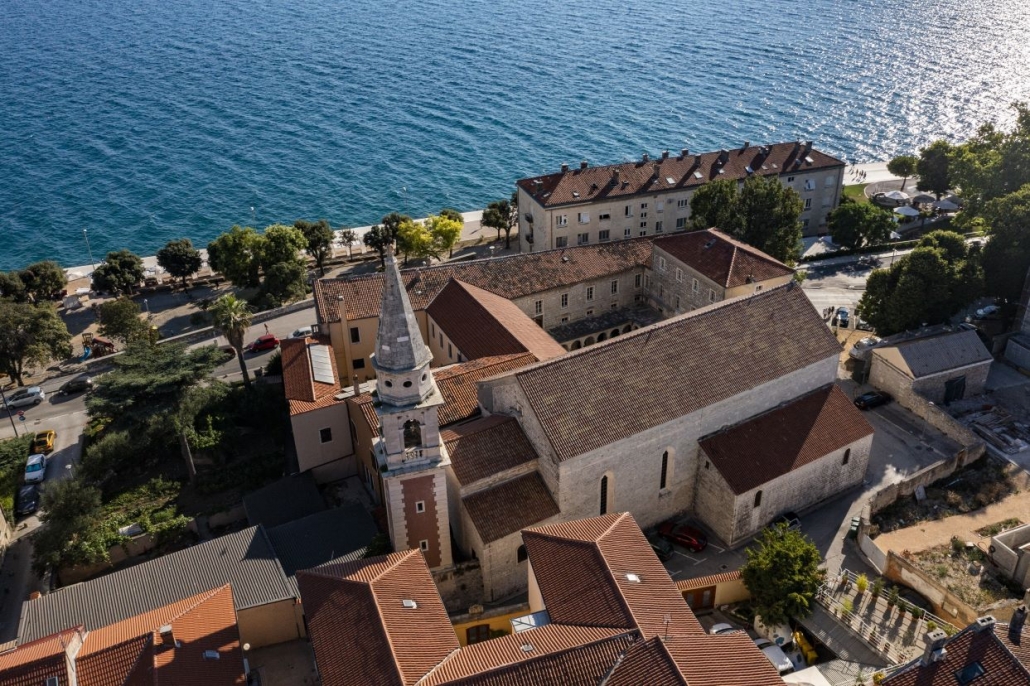
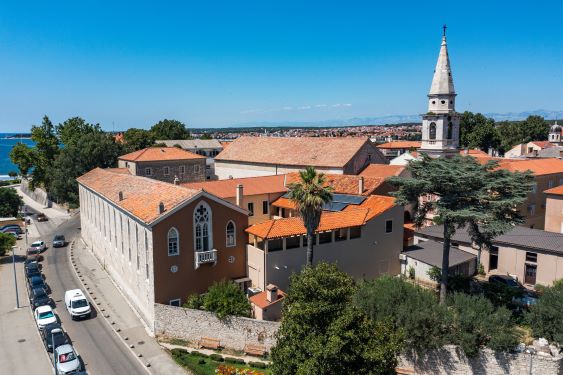
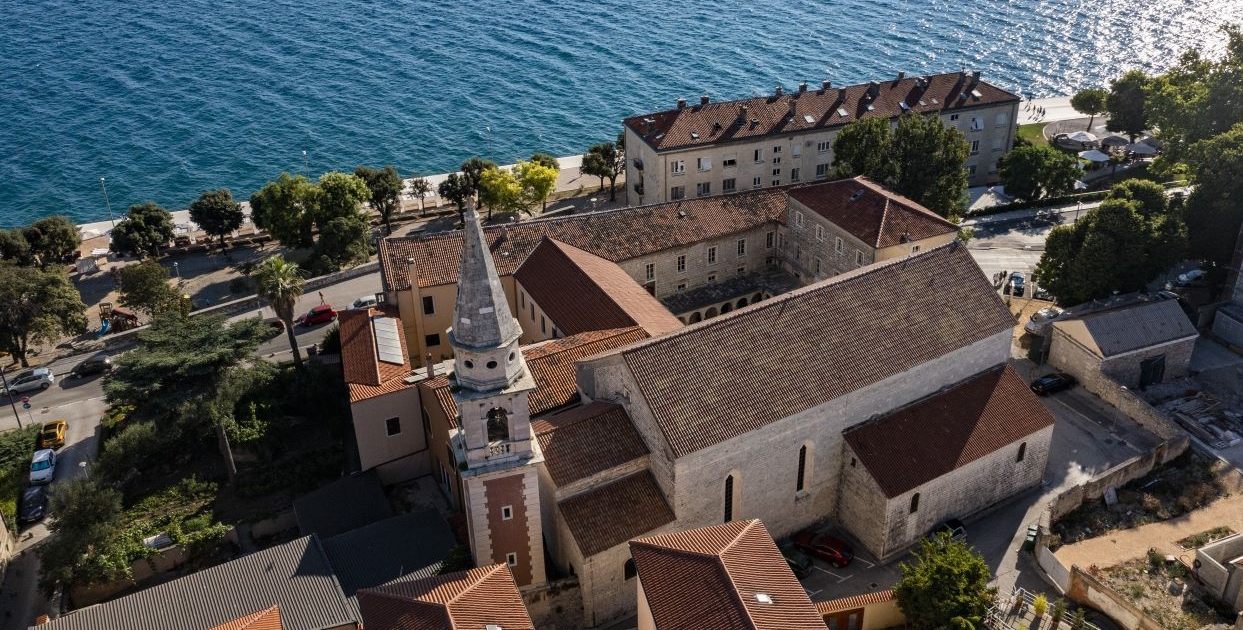
St. Francis Monastery in Zadar is a Roman Catholic Franciscan monastery dating back to the 13th century. It grew from the hospice of St. Anthony the Abbot in the western part of the city, where, according to tradition, St. Francis of Assis took shelter during his stay in the city when he was “thrown by the winds opposite to the Slavonian soil” on his way to the Holy Land in 1212.

The church is the oldest Gothic church in Dalmatia. The construction of the current Monastery began in 1249 and was finished at the end of the century, so the church, the sacristy, the monastery wings and the original cloister were built. An important typological feature of the church is its three-apse rear structure, which the experts bring into connection with the Gothic architecture of Franciscans and Dominicans from Umbria and Veneto during the 13th century. The sacristy, in which the Peace of Zadar was signed in 1358, was also a chapel of St Louis and the chapter hall. Its significant rearrangement, with the furnishing of the choir and the sanctuary, took place at the end of the 14th century, when the General Chapter in Cologne proclaimed the monastery the seat of the Franciscan province of St Jerome for Dalmatia in 1393.

The choir rebuilding was completed by the mid-15th century with the construction of Giorgio da Sebenico’s podium on the site of the presumed earlier railing.

In World War II, it suffered major damage from the bombing and was briefly abandoned.    After the war it was reconstructed and returned to it’s original state, with deeper interventions in 1962, 1963, 1977 and 1980.

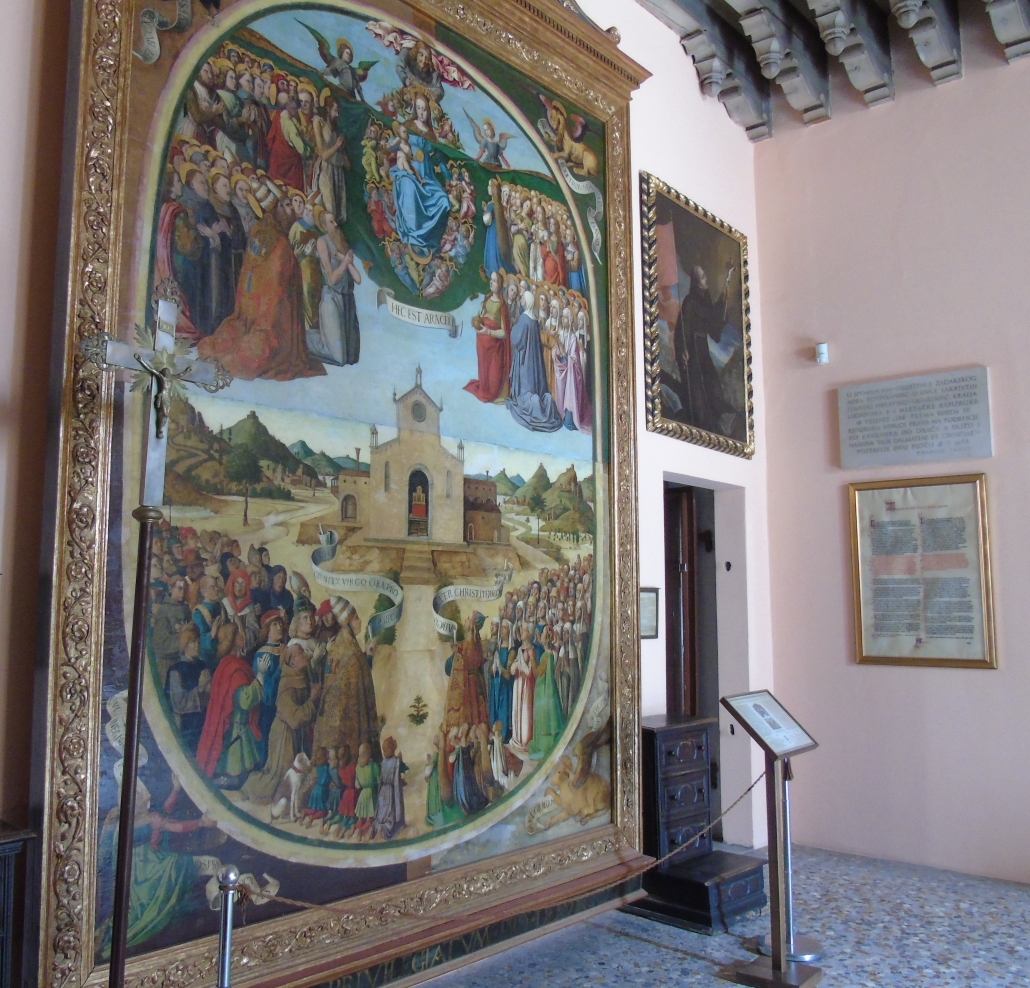
It has rich picture gallery as well as a collection of codices and parchments.

Adress and contacts

Trg sv. Frane 1, 23000 Zadar, Croatia

Phone: +385 23 250 468

Mobile: +385 917635499

Email: stipenosic52@gmail.com

Location

St. Francis Monastery is located in the historical core of Zadar, old Croatian city, situated at the eastern  Adriatic coast.

GPS Coordinates: 44°06’59.9″N 15°13’19.3″E

How to get it

The A1 motorway runs very close to Zadar, so it can easily be used if you’re reaching the town from either north or south Croatia.

The famous Jadranska magistrala coastal road (road D8) also reaches Zadar if you’re driving up the Croatian coastline, e.g. from Split.

You can look up timetables for buses to and from Zadar on the Zadar Bus Terminal website. You will find routes from and to all the major towns, cities and places in Croatia, such as Zagreb, Split, Dubrovnik, Rijeka, Sibenik and elsewhere.

There are international ferry services to Zadar from Italy.

Zadar Airport (ZAD) serves as the primary aerial gateway. It is conveniently located just 10 kilometers east of the city. This compact airport handles a growing number of flights. It offers excellent access for international visitors in 2025.

Map loading, please wait ...

Visitable spaces

Cloister (Courtyard), Church, Sacristy and Museum/Treasury

Museum/Treasury has permanent exhibition. Among other valuable works of art,  it also contains a silver-plated processional cross made in the first half of the 14th century by Francis Antonius of Milan. The cross depicts twenty miniature figures of saints. Among these figures are Franciscan saints, some of whom are members of the Angevin royal line. For this reason, it is believed that the cross was given to the Franciscans by the wife of Louis I, Queen Elizabeth Kotromanić, just at the time of the signing of the Peace of Zadar. The cross was stolen and after almost 50 years it was returned to the Franciscans in 2023.

A copy of the peace treaty on parchment paper is displayed in the sacristy, in the room where the agreement was signed on 18 February 1358 between the Hungarian-Croatian king Louis I the Great and the Venetian legation, according to which the Venetians renounced Dalmatia.

A memorial plaque placed on the sacristy wall in 1958 during the celebration of the 600th anniversary commemorates this event. During the celebration of the 650th anniversary, a partial copy of the treaty on parchment was placed below the memorial plaque.

Useful Information

Opening hours, staff and links

  • Opening timetable

    From May till October from 10.00 a.m. till 02.00 p.m. every day, except on Sunday and holidays.
    The museum inside the monastery could be visited on request, too, and then the exact date should be indicated in the request sent by e-mail a few days earlier (e-mail address: svetifrane@europe.com).

  • Service Staff

    There is no permanent professional staff, but if a group is notified, it is possible to order a professional guide.

    There is one volunteer who also provides basic information about what can be seen.